The maintenance of order and comfort in the cramped confines of an airplane cabin is governed by crucial unspoken rules rooted in basic individual awareness. These protocols—such as not reclining your seat without checking first, yielding armrests to the middle passenger, and observing quiet boundaries—are essential guidelines that help passengers navigate this shared, tight space without conflict.
These essential guidelines, gathered from U.S. travel experts and seasoned flight attendants, serve as a code of conduct for a smooth and peaceful journey.
1. The Foundation: Politeness and Presence
A positive attitude starts the moment you board. Diane Gottsman, founder of The Protocol School of Texas, emphasizes that a courteous attitude towards the flight attendants upon entering the cabin makes a huge difference.
Andrew Henderson, a flight attendant with 22 years of experience, agrees that a simple “hello” and “thank you” is enough to establish rapport with the crew. This initial friendliness can set a positive tone for the entire flight, fostering better service and interaction should a need arise.
Headphone Awareness
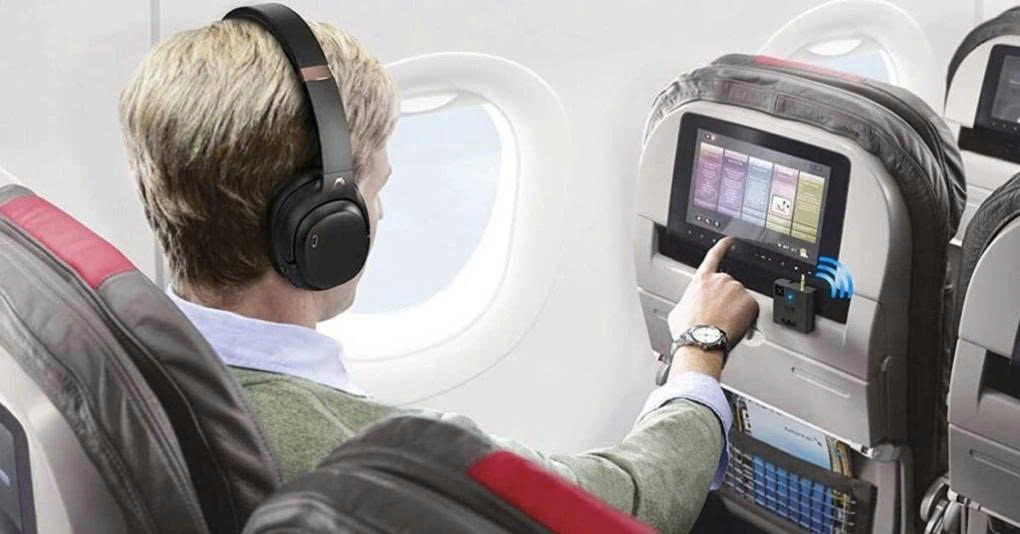
While noise-canceling headphones are a blessing for drowning out unpleasant cabin sounds, they pose a risk: they can cause passengers to miss critical announcements.
Rich Henderson, who operates the aviation website Two Guys on a Plane, shares a concerning observation: in an emergency, up to 50% of passengers wearing headphones remain glued to their phones, oblivious to the situation and crew instructions. “This is quite scary,” he notes, highlighting the danger of being completely disconnected from the environment.
Furthermore, passengers engrossed in their own world often miss the beverage cart, only to become irritated when they feel overlooked. Andrew Henderson advises: “If you see the service cart approaching your row, take off your headphones, look up, and show attention to avoid unnecessary hassles.” A nod or a moment of eye contact is a simple, effective signal.
However, headphones remain an invaluable tool for securing peace and rest. The consensus is clear: “just wear the headphones and behave courteously.” They act as a boundary, politely signaling a desire for quiet and undisturbed travel.
2. Navigating Shared Space: Kicking, Armrests, and Windows
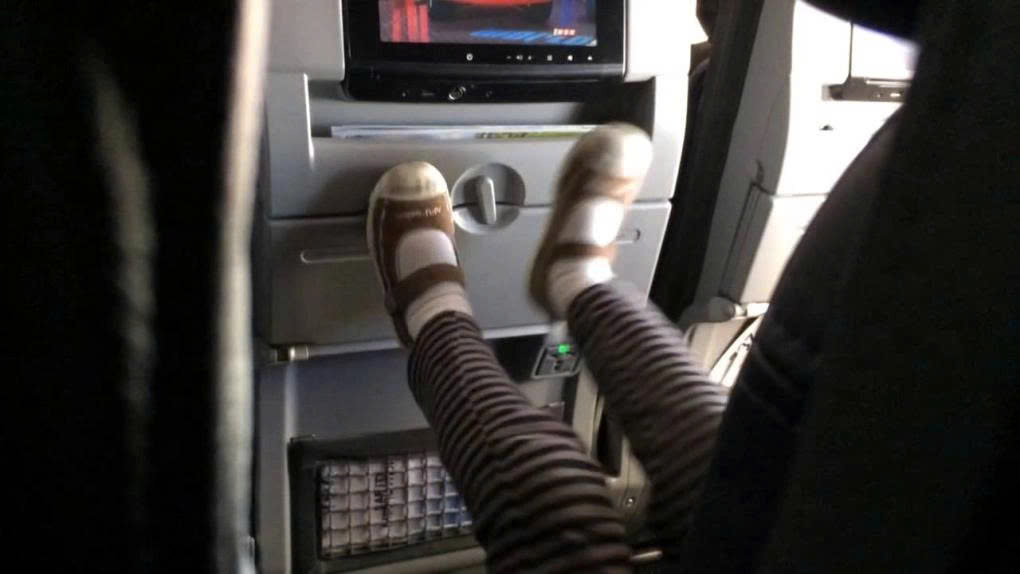
Conflicts often arise over minor infringements of personal space. The top complaints typically revolve around seat-kicking, armrest hogging, and window shade control.
Dealing with Kicking and Kids
If a child is kicking the back of your seat, Andrew Henderson recommends addressing the issue directly and politely. “We need to be kinder to each other. If someone is kicking your seat, talk to them frankly.” Clear, calm communication is the best way to defuse a situation before it escalates.
For parents, Diane Gottsman urges understanding from fellow passengers—no parent wants their child to cry or be disruptive. However, she stresses that it is the parents’ responsibility to ensure children do not “run wild” or constantly disturb others in a public setting. “Parents should supervise their children… and also pay attention if their child is kicking the back of the seat in front of them,” she cautions.
The Armrest Rule
Regarding the divisive issue of armrests, Diane Gottsman provides a definitive rule: the middle seat passenger gets priority for both armrests. The rationale is simple: the middle seat occupant has the most restricted space. The aisle passenger has easy restroom access and room to stretch into the aisle. The window passenger has the wall for support. The middle seat passenger “has nothing.” Samantha Brown wholeheartedly endorses this viewpoint. This unspoken concession is a gesture of fairness for the least desirable seat.
Window Shade Negotiation
For shared amenities like the window shade, negotiation is the key to avoiding conflict. Andrew Henderson, who prefers the shade closed, always asks his row-mates if they prefer it open. If they do, he negotiates a time for opening and closing.
Travel expert Samantha Brown offers a firmer stance, believing the window seat passenger has total control: “The person next to the window opens it if they want to. The person next to the aisle cannot demand it be closed.” However, Andrew Henderson advises against this rigid approach, arguing that only prioritizing oneself is a recipe for inflight friction. A collaborative approach fosters better cabin relations.
3. The Recline Debate: Courtesy Over Right
Seat reclining is perhaps the most enduring source of airplane argument. While seats are designed to recline, courtesy should always be the guiding principle.
Before tilting back, Diane Gottsman instructs passengers to perform a check: look behind you to see if anyone has their knees pressed against your seat, or if their tray table is down with food or drinks on it. This simple check prevents discomfort or spills.
Rich Henderson acknowledges the right to recline since the functionality exists. However, he maintains that the “right thing to do” is to raise your seat to the upright position during meal service. This allows the person behind you to eat comfortably and prevents them from having their meal space crushed.
4. Personal Boundaries: Odor and Intoxication
Two other major irritants are strong odors and excessive alcohol consumption.
Alcohol Awareness
Serious air rage incidents are often linked to alcohol. A passenger who starts drinking heavily at the airport and continues on the plane often becomes disruptive or aggressive. Diane Gottsman advises moderation: drinking is acceptable, but getting intoxicated is not. Intoxication compromises not only the passenger’s safety but the well-being of the entire cabin.
Scent Sensitivity
In the confined air of a cabin, odors are amplified. Passengers should be mindful of what they carry on, avoiding pungent foods like fish or boiled eggs. Andrew Henderson’s rule is straightforward: “Just because you don’t find it strong doesn’t mean others don’t.” Likewise, applying heavy perfume or cologne should be avoided, as strong scents can cause discomfort or allergic reactions in others.
Hygiene and Grooming
Personal care should be handled before the flight. Never clip your fingernails or toenails on a plane. This is universally considered unsanitary and deeply offensive. Passengers should also ensure good body hygiene before flying.
Finally, while it may be tempting to remove shoes, foot odor is a common cabin complaint. If you must remove your shoes, wear socks and ensure your feet are clean. Samantha Brown sets the gold standard for inappropriate behavior: “In any circumstance, you must never place bare feet on someone else’s armrest.” She calls this “the most offensive passenger experience,” emphasizing that personal space and sanitation are non-negotiable.
In summary, Rich Henderson offers the ultimate travel advice: “The most important thing is for us to try to be a little kinder to each other, especially in a cramped space like an airplane.” By adhering to these unwritten rules, passengers contribute to a shared environment that is tolerable and respectful for all.
(According to CNN)