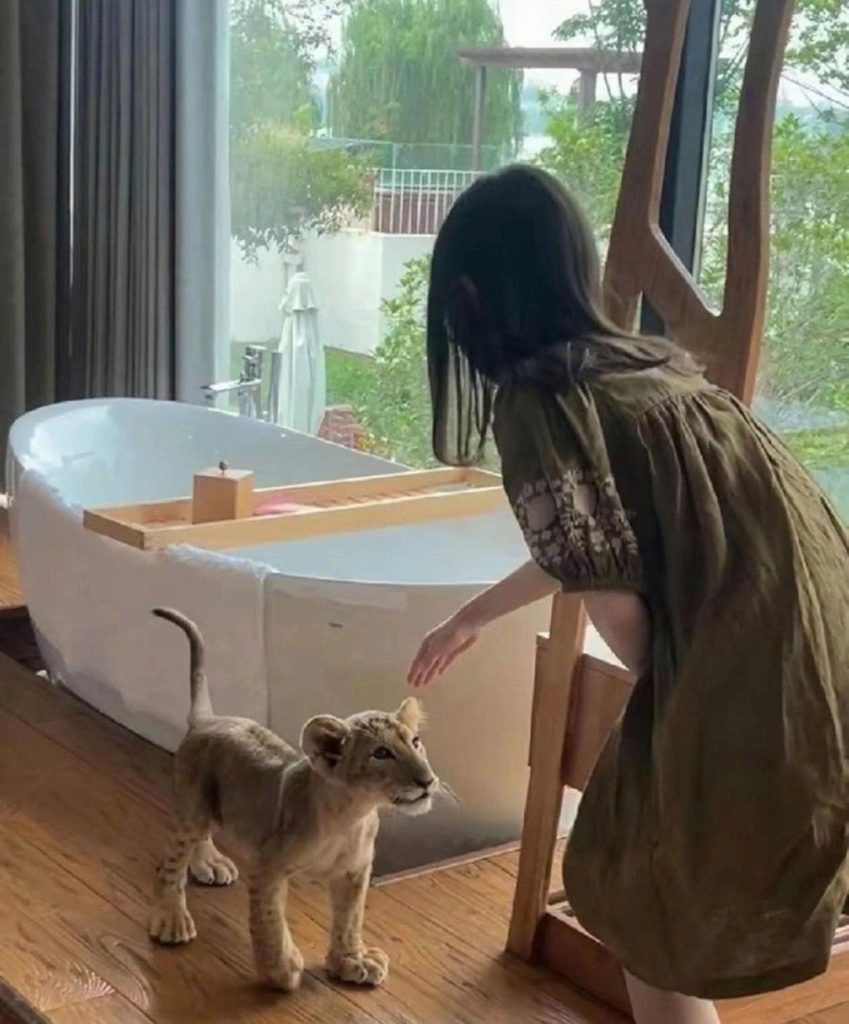
A unique and highly controversial tourist service has emerged in Jiangsu province, East China, where the Happy Countryside Resort is offering guests the chance to be awakened by genuine lion cubs entering their rooms. This unusual service, priced starting from $88 USD (approximately 630 Chinese Yuan), has triggered a heated debate across social media and in state-run media outlets regarding animal welfare, legality, and ethics in commercial tourism.
The Service: A Close Encounter with Wild Paws
Located in Niujiao Village, Suqian City, the Happy Countryside Resort introduced the service as a novel experience primarily targeting families with young children. During the morning hours, specifically between 8:00 AM and 10:00 AM, resort staff carefully escort the young lion cubs into the designated guest rooms. The interaction session is brief, lasting a strict seven minutes to minimize stress on the animals and ensure safety protocols are followed.
Images and videos of the activity quickly went viral, showing excited children interacting with the cubs—some can be seen gently petting the animals, and others are captured holding them. The resort currently allocates 20 rooms for this premium service, and according to their representatives, the response from the public has been overwhelming. The resort claims the service has been so popular that it is fully booked until the end of the current month.
To manage the inherent risks of interacting with wild animals, the resort requires all guests booking the experience to sign an “Asian Lion Wake-Up Service Agreement.” Furthermore, the hotel assures the public that the lion cubs are never left unattended and are always accompanied by trained professional handlers who maintain control and ensure the safety of both the animals and the guests.
Legal Compliance and Public Support
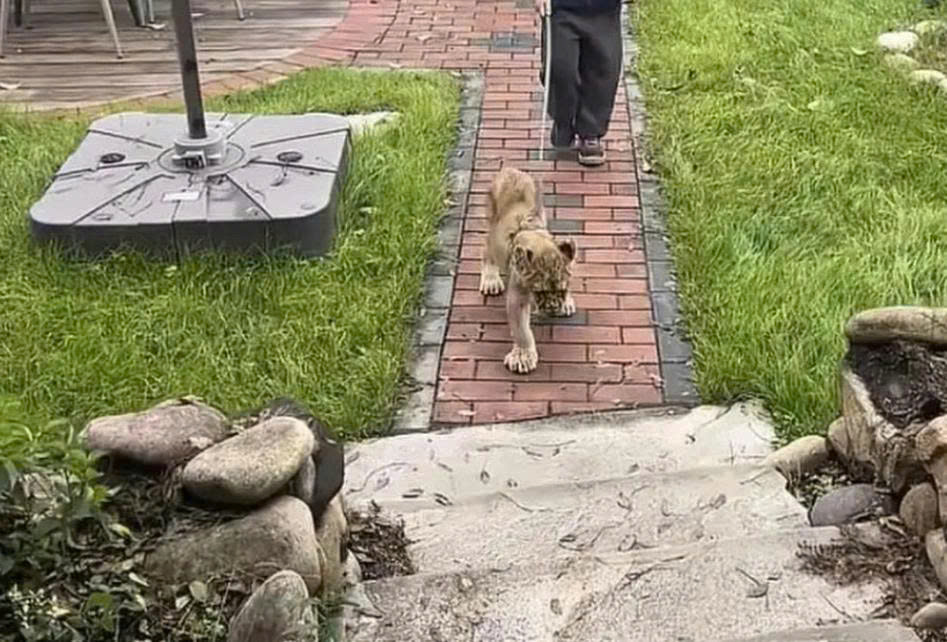
In response to initial scrutiny, a spokesperson for the Happy Countryside Resort asserted that the lion cub wake-up service is fully compliant with Chinese law. They maintained that the resort possesses the necessary permits and qualifications for raising lions and has properly registered the specific service with the local regulatory authorities.
The service has garnered enthusiastic support from one segment of the public. Many parents praised the resort for offering such a “once-in-a-lifetime and unforgettable experience” for their children. Comments online included affirmations like “This is truly innovative and wonderful!” and practical observations such as “My kids will definitely jump out of bed for this; no more morning struggle.” Some supporters even suggested expanding the offering to include other exotic animals, like “adorable bear cubs” or “playful tiger cubs,” to maximize tourist appeal.
The Backlash: Ethics, Safety, and Exploitation
Despite the initial enthusiasm, the backlash has been significant and centers heavily on animal welfare and public safety. Critics argued that even young lions are inherently wild animals and that close, unsupervised interaction poses an unnecessary risk of injury to the guests, particularly small children.
The most forceful criticism came from professional and media commentary. In an editorial published on November 11, the Beijing Youth Daily newspaper sharply criticized the resort, labelling the activity as “deviating from acceptable norms.” The editorial argued that while the service aims to create a fun memory for children, the practice fundamentally “infringes upon the rights and welfare of the animals.”
The debate was also framed by a recent, similar incident. In June, a hotel in Chongqing was forced to cease its wake-up service involving Red Pandas after local authorities intervened. Officials found that the hotel was in violation of the Wildlife Protection Law.
The legal and ethical stakes are arguably higher for the Jiangsu resort. Red Pandas are categorized as Class II Protected Animals in China, whereas lions and tigers hold the more stringent classification of Class I Protected Animals. An article in The Paper on November 11 delivered a scathing condemnation: “These wake-up services, whether involving Red Pandas or lion cubs, are essentially profiteering by exploiting animals. They are indefensible from both legal and moral perspectives.” Critics emphasize that using protected wildlife for trivial commercial gain degrades the animals and potentially undermines conservation efforts.
The controversy highlights the persistent tension between the rapidly expanding wildlife tourism sector in China and the increasing public and official scrutiny over animal protection standards.
(According to SCMP, NDTV)