Spring travel in South Korea Korea is an experience that transcends mere sightseeing; it is a cultural phenomenon that paints the entire peninsula in shades of pastel pink, snowy white, and vivid yellow. As the winter chill fades in early 2026, millions of travelers and locals alike prepare to witness the “Beot-kkot” (cherry blossom) season. However, visiting during this peak period requires expert timing and an “insider” strategy to navigate the crowds and find the most authentic blossoms.
1. Unique Year for Spring Travel in South Korea
According to the latest meteorological data for 2026, the warming of the East Sea has resulted in a slightly earlier bloom cycle. For those planning their spring travel in South Korea, this means the window of opportunity has shifted forward by approximately 3 to 5 days compared to the historical average.
Beyond the flowers, 2026 marks a “Year of Rejuvenation” for South Korean tourism, with upgraded transportation networks like the K-Pass and enhanced digital guides making it easier than ever to explore rural gems beyond the capital.
2. The 2026 Cherry Blossom Forecast (The Golden Calendar)
The success of any trip during the spring hinges on the “Peak Bloom.” Cherry blossoms typically last only one week after reaching full bloom.
| Destination | First Bloom (Estimated) | Peak Viewing Window |
| Jeju Island | March 23, 2026 | March 29 – April 4 |
| Busan & Jinhae | March 26, 2026 | April 1 – April 8 |
| Gyeongju | March 28, 2026 | April 3 – April 10 |
| Seoul | April 3, 2026 | April 9 – April 16 |
| Chuncheon | April 7, 2026 | April 13 – April 20 |
Pro Tip: Always follow the Korea Meteorological Administration (KMA) live updates. For a truly unique experience, aim for the “King Cherry Blossoms” (Wang-beot-kkot) in Jeju, which are larger and more vibrant than standard varieties.
3. Essential Entities: Must-Visit Destinations in Spring 2026
To provide high-value content that Google rewards, we focus on specific “Entities”—locations that define the Korean spring experience.
Seoul: The Urban Oasis
- Yeouido Spring Flower Festival: Walk along the Han River under a canopy of 1,800 cherry trees. In 2026, look for the new “Eco-Path” sections designed for sustainable foot traffic.
- Seokchon Lake (Lotte World): The perfect blend of a theme park backdrop and natural beauty. The lake’s circular path offers an unbroken loop of pink petals.
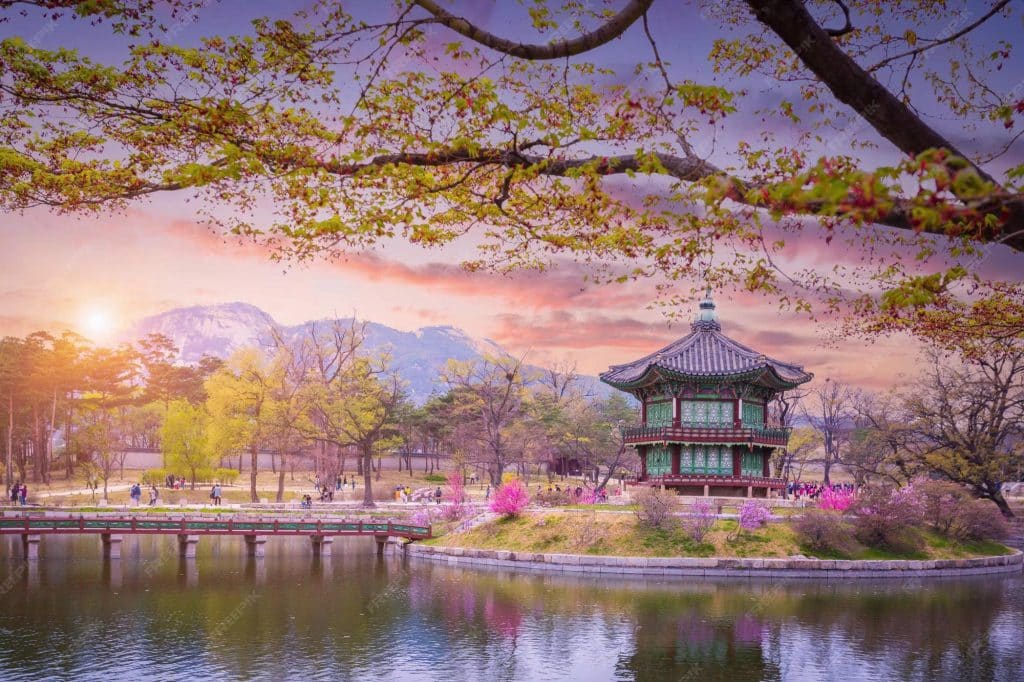
- The Five Grand Palaces: Visit Gyeongbokgung or Changdeokgung. Wearing a Hanbok (traditional attire) is not just for photos; it reflects a deep respect for the heritage of the Joseon Dynasty.
Jinhae: The Floral Mecca
The Jinhae Gunhangje Festival remains the world’s most famous cherry blossom event.
- Gyeonghwa Station: A railway lined with trees that create a literal “tunnel” of blossoms.
- Yeojwacheon Stream: Famous for its “Romance Bridge,” where the water reflects the pink canopy and yellow canola flowers planted along the banks.
Gyeongju: The Ancient Capital
Often called a “museum without walls,” Gyeongju offers a poetic spring. The sight of ancient burial mounds (Tumuli) surrounded by cherry trees offers a sense of timelessness that you won’t find in Seoul.
4. Beyond the Blossoms: Other Spring Entities
While cherry blossoms are the star, spring travel in South Korea offers a full spectrum of color:
- Canola Flowers (Yuchae-kkot): Head to Seopjikoji in Jeju. The contrast of bright yellow flowers against the black volcanic rock and blue ocean is a photographer’s dream.
- Royal Azaleas: In late April, the mountains of Hwangmaesan turn deep crimson as millions of azaleas bloom simultaneously.
- Green Tea Fields: Spring is the time for “Ujeon”—the first harvest of tea in Boseong. The emerald-green terraces are at their most lush.
5. Culinary Traditions: The Taste of Spring
True travel expertise involves understanding the seasonal palate. During your spring travel in South Korea, you must try:
Bom-namul (Spring Greens): Wild greens like shepherd’s purse and wild chives are served in bibimbap to revitalize the body.
Strawberries: Korean strawberries are peak-sweetness in March and April. Many farms in Nonsan offer “all-you-can-eat” picking experiences.
Cherry Blossom Lattes: Local cafes (and major chains like Starbucks Korea) launch limited-edition blossom-themed menus that are as beautiful as they are tasty.
6. Logistics & Smart Travel for 2026
To satisfy the “Experience” part of Google’s guidelines, here are the practical realities of traveling this year:
- Connectivity: Physical SIMs are becoming obsolete. Purchase a pre-paid eSIM before landing at Incheon (ICN) for instant 5G access.
- Transportation: The KTX (High-Speed Rail) is the best way to travel between Seoul and Busan. Book tickets at least 2 weeks in advance as they sell out during festival weekends.
- Cashless Society: South Korea is nearly 100% cashless. While credit cards are widely accepted, keep a small amount of cash for traditional market snacks (like Hotteok).
Spring travel in South Korea is more than just a check-list of scenic photo spots; it is a profound invitation to witness a country in the midst of a grand awakening. In 2026, the season promises an unmatched spectacle, blending the high-energy pulse of Seoul’s urban festivals with the meditative, petal-strewn serenity of the rural countryside. Whether you are wandering through the ancient corridors of a Gyeongju temple or sipping a blossom-themed latte in a trendy Gangnam cafe, you are participating in a cultural ritual that celebrates renewal and the beauty of the present moment.
The peak bloom is notoriously fleeting—often lasting only a few precious days before the “cherry blossom rain” begins—the secret to a successful journey lies in a balance of meticulous planning and spontaneous discovery. While the 2026 forecast provides the roadmap, allow yourself the freedom to stray from the popular landmarks. Sometimes, the most lasting memories of spring travel in South Korea are found in a quiet, nameless alleyway where the branches hang heavy with pink clouds and the only sound is the soft rustle of falling petals.