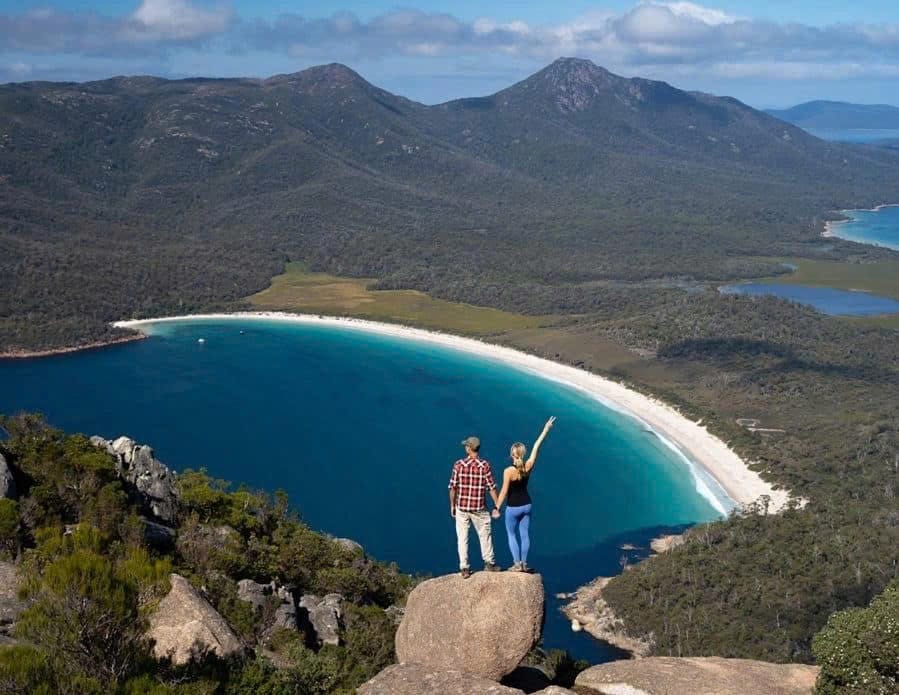
In an era where travelers increasingly rely on technology to curate their itineraries, a remote village in Australia has become the focal point of a bizarre phenomenon: the “ghost” tourist attraction. Numerous groups of visitors have been flocking to the secluded hamlet of Weldborough, Tasmania, searching for a luxurious hot spring resort that simply does not exist. This influx of confused tourists is the direct result of misinformation generated by Artificial Intelligence and published on a prominent travel website.
The confusion began with an article posted on the website of Tasmania Tours, a local travel company. The now-deleted post enthusiastically urged travelers to discover a “peaceful retreat” known as the Weldborough Hot Springs. To make the claim even more convincing, the AI-generated content ranked these non-existent springs as one of the “7 Best Experiences in Tasmania for 2026”.
In reality, the historic tin-mining village of Weldborough has never housed a hot spring. The only natural water source available for those hoping for a relaxing soak is the Weld River—a body of water known for being bone-chillingly cold rather than geothermally warmed.
The article had been live since July 2025, and for months, the quiet northeastern region has seen a steady stream of tourists arriving with towels and swimsuits in hand, looking for a destination that only exists in a digital hallucination.
Local businesses have had a front-row seat to the confusion. Kristy Probert, the owner of a pub near the village, recounted a recent encounter with a large group of misled travelers. “I met a group of 24 people who arrived here just two days ago specifically looking for the hot springs,” Probert said.
Knowing the layout of her home turf, she made the group a lighthearted wager: if they actually managed to find the mysterious springs, she would treat them to free beer for the entire night. “Unsurprisingly, they never came back,” she remarked, highlighting the disappointment many feel after traveling long distances based on false data.
What makes the misinformation particularly dangerous is its blend with reality. The AI-generated list placed the “ghost” Weldborough springs alongside genuine, world-class attractions such as the Hastings Caves and Thermal Springs, making it difficult for the average reader to distinguish fact from fiction.
The incident at Tasmania Tours highlights a growing trend in the travel industry: the aggressive use of AI for content marketing. While major global corporations have praised AI for its efficiency, smaller businesses feel an immense pressure to adopt these tools just to keep pace.
“We are trying to compete with the big players, which requires us to constantly refresh and update our content,” explained Scott Hennessy, the owner of Tasmania Tours. To meet this demand, the company hired a third-party marketing firm that utilized AI to churn out blog posts. Hennessy noted that while the company typically audits all content before publication, a few articles—including the one about Weldborough—were published “by mistake” while he was traveling abroad.
This is far from the first time AI has led tourists astray. In the past year, two travelers in Peru set off on a grueling journey to find the “Sacred Humantay Canyon” in the Andes—a location fabricated by a chatbot. They were only stopped when a local guide overheard their plans and warned them of the non-existent destination.
Similarly, a couple used ChatGPT to plan a romantic sunset hike in Japan. While the hike was successful, the AI provided the wrong operating hours for the cable car down the mountain. As a result, the couple found themselves stranded on a dark peak overnight.
Despite these high-profile failures, public trust in AI remains high. A survey by Booking.com revealed that 89% of consumers are interested in using AI to plan their future trips. Interestingly, many travelers now view AI assistants as more objective and reliable sources of information than human travel bloggers or social media influencers.
However, as AI becomes a staple of the travel industry, the risk of “ghost” destinations will likely persist. Without rigorous human fact-checking, the digital landscape will continue to produce Weldborough Hot Springs—traps that tourists only discover once their feet are on the ground and their hopes are dashed.
(According to Euronews)