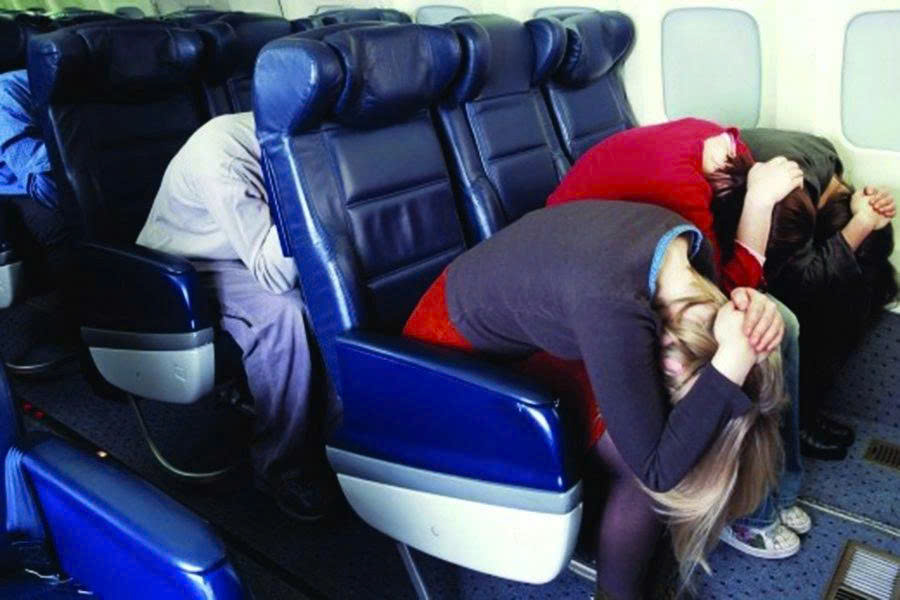
The moment a flight crew announces an imminent emergency, passengers are instructed to adopt a specific posture: bend your head forward, cover your head and neck with both hands, and place your feet firmly on the floor. This often-repeated protocol, known as the “Brace Position,” is a critical safety measure designed to prepare the human body for the severe deceleration forces expected during a sudden, unexpected impact.
While the instruction is mandated on flights globally, many passengers comply without fully understanding the underlying science, often questioning the true necessity of the position and its effectiveness in enhancing their safety.
The Science Behind the Position
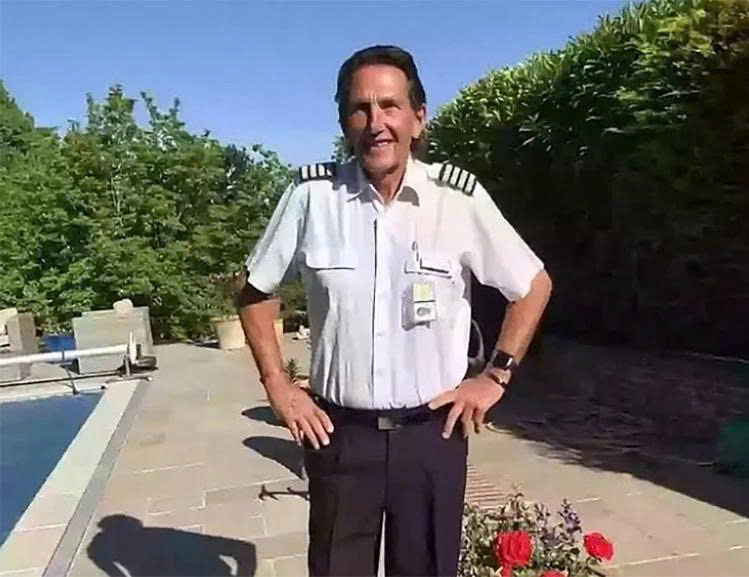
Nick Eades, one of the world’s most experienced Boeing 747 pilots, having logged thousands of flight hours, sheds light on the specific, life-saving rationale behind this crew instruction. The core goal of the brace position is not to prevent all injury, but to prevent catastrophic injury to the head and neck—the most vulnerable parts of the body during a high-speed collision or crash landing.
The primary mechanism the brace position combats is the “whiplash effect.” During a sudden, forceful stop, an unrestrained head will be violently thrown forward. This sudden, extreme force on the neck can cause severe cervical spine trauma, resulting in serious, debilitating, or even fatal injuries.
“It is precisely about mitigating whiplash injuries,” Nick explained. “You are deliberately trying to counteract that sudden, severe forward jerk of the head, which can cause significant injury, potentially leading to death.” By bending the head forward and using the hands to shield the skull and stabilize the neck, passengers are effectively minimizing the distance the head has to travel before impact, thus reducing the momentum and force exerted on the neck and brain. Nick emphasized that flight attendants are expertly guiding passengers into the configuration that ensures the body is in the least vulnerable position possible.
The Specifics of a Safe Brace
The exact method of bracing depends slightly on the seating configuration (whether the passenger is sitting in the front row, or has a seat in front of them):
- For seats with a seat in front: The passenger should lean forward, pressing their head against the seat in front of them, using their hands to cushion their head against the back of the seat.
- For seats without a seat in front (Bulkhead or Exit Rows): The passenger should bend over and press their chest against their thighs, placing their head as low as possible between their knees. The hands should remain interlaced over the back of the head and neck.
Crucially, feet should be flat on the floor, slightly behind the knees, to prevent the lower legs from sliding forward and being injured by the force of the impact or collapsing seat structure.
Clarifying the Instructions
Nick pointed out that the somewhat confusing and lengthy instructions often lead to passenger hesitation or incorrect execution. He suggests that in the future, the verbal guidance from flight attendants may be simplified for better comprehension during a high-stress emergency.
He anticipates a move away from long-winded sentences in favor of concise, clear commands that are instantly actionable, such as: “Head down and cover your head.” This streamlined communication could save crucial seconds and ensure compliance when every moment counts.
Beyond the Brace: Other Safety Advice
In addition to mastering the brace position, aviation safety experts in the UK and US have repeatedly stressed the importance of remaining situationally aware. Passengers are advised to:
- Pay Attention to the Safety Briefing: Rather than being distracted by electronic devices, actively listen to the flight attendants’ instructions before takeoff. Knowing the location of safety equipment and procedures is non-negotiable.
- Identify Your Exits: Upon settling into your seat, immediately count the number of rows to the two nearest emergency exits—one in front and one behind. In low visibility conditions (smoke, darkness), this count can be the difference between life and death.
While choosing a seat for comfort is common, experts reiterate that to date, there is no conclusive statistical evidence identifying a single location (front, middle, or back of the plane) as universally the safest position on the aircraft in the event of an emergency. Survivability ultimately depends on the nature of the crash, the structural integrity of the cabin, and the passenger’s preparation and reaction speed.
(According to DM)