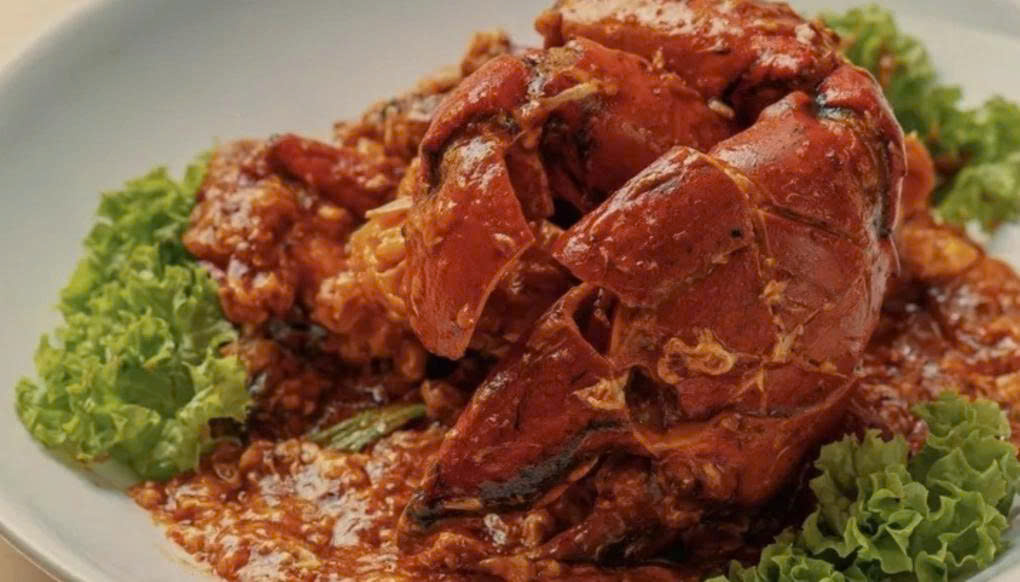
The Singaporean Chilli Crab was accidentally created when a chef ran out of ketchup, forcing them to add chili sauce instead.
Singapore’s culinary treasure trove is diverse, ranging from vibrant street food to luxurious restaurant dining. However, no dish surpasses the Chilli Crab in fame. It brings together a perfect balance of sour, spicy, salty, and sweet flavors, and has been the “national dish” of Singapore for 70 years.
Alvin Lim, a food and lifestyle writer who enjoys exploring the stories behind dishes, shared insights about Chilli Crab with the Michelin Guide.
The Sauce was Born Out of Chance
Chilli Crab emerged around the 1950s, and the creators of the dish were a married couple, Mr. Lim Choon Ngee and Mrs. Cher Yam Tian. Mr. Lim would catch the crabs, and Mrs. Cher would prepare them. To make mealtimes less monotonous, instead of steaming the crabs, Mrs. Cher stir-fried them with bottled tomato sauce. When she ran out of the tomato sauce, she added chili sauce instead.
This improvisation became the signature dish of the humble seaside seafood stall they later opened. Word spread quickly. In 1963, Mr. Hooi Kok Wah, one of Singapore’s four top Chinese chefs at the time, learned about the dish and created his own version for his restaurant. Chef Hooi’s version featured a richer sauce made from tomato sauce, vinegar, chili sauce, and egg whites. This rich, spicy, sweet-and-sour dish officially became the enduring symbol of Singaporean cuisine.
According to Paul Liew, one of the three third-generation siblings who runs Keng Eng Kee (Bukit Merah) restaurant, the allure of Chilli Crab lies in the layers of flavor that are shaped by Singapore’s multicultural identity.
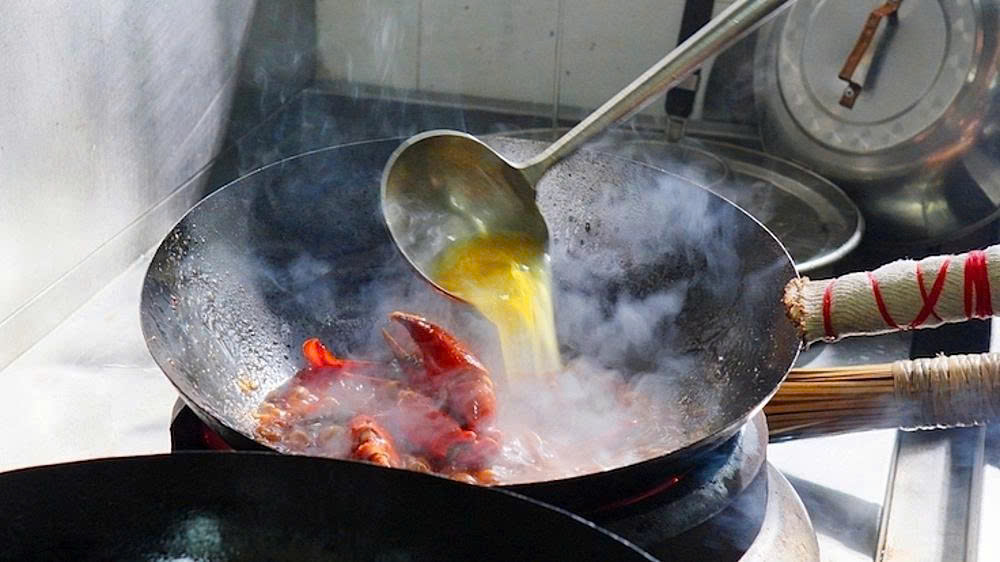
“Singaporean food is a melting pot because Singapore itself is a melting pot,” said Paul Liew. Since his school days, he has been exposed to many different races and cultures. Chinese food in Singapore is not the same as in mainland China, and Malaysian food is similar—different from that found in Indonesia or Malaysia. They are adapted to suit the Singaporean palate. Chilli Crab is no different, influenced not only by Chinese cuisine but also by Malaysian and Western culinary traditions.
At his restaurant, Liew serves Chilli Crab using meaty crabs imported from Sri Lanka, Indonesia, and the Philippines. “We start with a rempah (a ground spice paste) inspired by Malaysian and Chinese culture, which includes galangal, ginger, and chili, and stir-fry it in a hot wok. We then add bottled tomato sauce, which originates from Western cuisine. All of these elements blend together to create a dish that is very… Singaporean,” he explained.
Before being served, the sauce is thickened with a small amount of diluted starch and finished with beaten eggs, giving it a smooth, rich, and aromatic quality. This type of sauce makes diners want to pour generous amounts over rice, or, as Singaporeans prefer, dip deep-fried buns (mantou) into it.
Preserving Heritage Through Food
At 55 years old, the Liew family’s establishment is only a few years younger than the nation of Singapore itself (established in 1965). Therefore, it is no surprise that the owner often compares the restaurant’s journey to the evolution of Singaporean gastronomy. At Keng Eng Kee, three generations have grown up alongside Singapore and continue to preserve these heritage flavors.
But beyond preservation, Liew is also involved in the trend of refreshing traditional dishes alongside his peers, a process he finds “very exciting.” Even national treasures like Chilli Crab are not immune to this wave of innovation, leading to creative versions like chilli crab-flavored fries, chilli crab bao (buns), and even chilli crab burgers.
A few years ago, Liew briefly sold chilli crab-battered soft-shell crab burgers from a small side counter in the restaurant. Although the side product was short-lived, the flavor, to the owner, was still “peak.” He cherishes many childhood memories centered on the Chilli Crab cooked by his grandmother, the founder of Keng Eng Kee.
For Liew, family is the soul of zi char stalls—a philosophy that extends not just to customers but also to the staff. His family was the source of light amidst the challenges of the COVID-19 pandemic.
“In the family restaurant business, we almost never have a chance to sit down and eat together. But when COVID hit, when dine-in service was suspended and everything was difficult, that was when the whole family was able to gather and eat meals together. Looking back now, that is truly precious,” he recalled.
Perhaps one of the reasons Chilli Crab remains so beloved is its ability to connect people, friends, and families, even amid the fast-paced modern world.
“This dish is special. Whenever the crab is served at the table, people immediately put down their phones. Chilli Crab must be eaten by hand, so whatever you are doing, you have to stop, and that’s when I feel the meal truly begins,” he said. That is the essence of a true family meal: gathering around the table, eating, chatting animatedly, and laughing out loud.
(According to Michelin Guide)